A step-by-step guide for registered investment advisers and broker-dealers to document requests, interviews, privilege and enforcement risk
Why a Routine Examination Still Requires Careful Handling
A routine examination is not an investigation, and selection is not an accusation—but an examination builds a record. The SEC’s Division of Examinations Exam Handbook, released on October 1, 2026, makes the first distinction explicit. FINRA has said the same for years. In our experience, the enforcement matters that grow out of routine exams rarely turn on the deficiency that prompted them. They turn on three things:
- What the firm produced
- What its people said
- How management reacted once the request arrived
Drawing on decided cases, settled orders, risk alerts and Regulatory Notices, this article follows both examination programs from the first letter through final disposition, identifies the authority at each stage and explains why a registered investment adviser or broker-dealer should bring in experienced regulatory counsel the day the letter arrives. Part I covers SEC examinations; Part II covers FINRA examinations, including considerations for dual registrants. The analysis then addresses counsel’s role, followed by practical considerations and frequently asked questions. Firms that have just received a request letter can begin with Practical Considerations and use the relevant examination walkthrough for context.
Key Takeaways for SEC and FINRA Examination Responses
- The authority is statutory, and the clock moves fast. Advisers Act Section 204(a) and Exchange Act Section 17(b) make required records subject to examination “at any time.” The Handbook says the Commission expects records to be available within 24 hours in most circumstances, though staff usually allows two weeks for the initial request.
- FINRA does not need a subpoena. Rule 8210 requires members and associated persons to produce information and testify, with no exception for foreign law. Under Rule 9552, a firm or person that does not respond can be suspended and, three months later, expelled or barred.
- The response does more damage than the deficiency. In Gilder Gagnon Howe, Simmons and American Portfolios Advisors, records were altered or backdated after the exam began, and the individuals responsible were personally sanctioned.
- Privilege is easy to lose. Staff requires a privilege log for anything withheld, and courts have held that sharing protected material with the SEC, even orally, can waive protection against private litigants.
- No rule requires counsel, but the risk usually justifies it. A deficiency letter does not foreclose enforcement, and staff silence after a response is not agreement. Counsel should work alongside the CCO from the first production.
What Authority Do the SEC and FINRA Have to Examine Firms?
SEC Examination Authority and Required Records
Section 204(a) of the Investment Advisers Act makes an adviser’s required records subject “at any time, or from time to time, to such reasonable periodic, special, or other examinations by representatives of the Commission as the Commission deems necessary or appropriate in the public interest or for the protection of investors.” Rule 204-2 identifies those records, including compliance policies in effect during the past five years and “[a]ny records documenting the investment adviser’s annual review” under Rule 206(4)-7(b). Rule 204-2(g)(2)(ii) requires an adviser that keeps records electronically to “[p]rovide promptly” what examiners request.1 For broker-dealers, Exchange Act Section 17(b) subjects required records to examination, and Rule 17a-4(j) requires the firm to “furnish promptly” to a Commission representative “legible, true, complete, and current copies” of requested records.2 Examiners measure an adviser’s conduct against its fiduciary duty, which the Supreme Court described in Capital Gains as an “affirmative duty of ‘utmost good faith, and full and fair disclosure of all material facts.'”3
SEC Examination Completion Deadlines and Confidential Treatment
Congress also put the staff on a clock. Section 4E(b) of the Exchange Act requires the staff, within 180 days after the later of the end of the on-site portion of an exam or its receipt of all requested records, to tell the firm in writing that the exam has concluded, has concluded without findings, or that the staff requests corrective action, subject to one additional 180-day period for complex exams. Exam information is presumed nonpublic under 17 C.F.R. § 203.2, but a firm producing sensitive material should still request confidential treatment under Rule 83, 17 C.F.R. § 200.83.4
FINRA Rule 8210: Information, Records and Testimony
FINRA has no subpoena power. Its authority comes from its rules, which the SEC oversees under Exchange Act Sections 15A and 19. Rule 8210(a) allows staff, “[f]or the purpose of an investigation, complaint, examination, or proceeding,” to require members and associated persons to provide information “orally, in writing, or electronically,” to testify under oath, and to permit inspection and copying of records in their “possession, custody or control.” Rule 8210(c) states that “[n]o member or person shall fail to provide information or testimony.” The rule reaches vendor-held records the member controls or can demand, notice is deemed received at the address in the Central Registration Depository, and FINRA keeps jurisdiction over former associated persons for two years.5 During an exam, FINRA tests compliance with Rules 3110, 3120, 3130, 4511 and 4530, and a failure to cooperate also violates Rule 2010.6
How Examination Handbooks, Risk Alerts and Oversight Reports Differ From Rules
The Handbook, risk alerts and FINRA’s Annual Regulatory Oversight Report serve a different purpose from the statutes and rules described above. None of that guidance binds anyone: the Handbook states that it “has no legal force or effect,” risk alerts carry the same disclaimer, and FINRA says its 2026 Annual Regulatory Oversight Report “does not create any new legal or regulatory requirements.” The guidance is still the best evidence of what examiners will ask for and how they will read the answers.
Part I. The SEC Examination, Step by Step
Step 1. Selection and planning
Selection is risk based. The Handbook lists prior exam history, supervisory concerns, tips and referrals, time since the last exam, client base, products and conflicts, leadership changes, financial stress, media reports, filings and custody of client assets. The Division’s 2023 adviser and 2024 broker-dealer risk alerts list substantially the same factors.7 The fiscal year 2027 priorities, announced October 23, 2026, add their own emphasis, including advisers’ fiduciary obligations, complex and illiquid products, private funds and broker-dealer AML.8 Staff reviews the firm’s filings and website before calling, and the Division “typically do[es] not disclose” why a firm was selected. Assume the team has read the brochure, Form CRS and the website closely, and that any gap between those documents and actual practice will be an early question.9
Step 2. The announcement call and the initial request letter
Most exams begin with a short call to the CCO, followed by a formal letter that sets out the initial request and cites the governing authority, which for an adviser is Section 204(a). Unannounced exams are limited. The Handbook states that “[t]he Commission expects that in most circumstances records should be available to staff within 24 hours,” though staff “usually provides two weeks” for the initial request and accepts reasonable extensions and rolling productions. Supplemental requests follow, and staff may contact custodians, administrators, auditors and clients directly.10 Division Director Keith Cassidy has urged firms to “avoid simply informing the examination team that [a request] cannot be completed” and instead to seek an extension or rolling production.11
This is when counsel should first be involved: to read each request against the actual business, confirm the entities and review period, put any extension or narrowing in writing, issue a preservation notice, set up a privilege review, consider Rule 83 requests, and make sure no one answers a request by creating a document that should already have existed.
Step 3. The initial request list and the problem of missing records
The 2023 IA Risk Alert attaches a typical request list covering organization and control persons, advisory agreements and fees, Form ADV and Form CRS, disciplinary history, compliance policies, testing and annual reviews, valuation, cybersecurity, account and trading data, code of ethics records, marketing and performance, financial records and custody. The 2024 BD Risk Alert follows the same pattern and adds clearing agreements, written supervisory procedures, branch office lists, Regulation Best Interest and AML materials, and net capital workpapers.12
Missing Records and Backdating: American Portfolios Advisors and Simmons
When a request asks for a record the firm should have but does not, the only acceptable answer is the truth. In American Portfolios Advisors, the staff’s May 7, 2021 request letter asked for records of the firm’s most recent annual compliance review. According to the Commission, “rather than responding that APA did not have any records responsive to the staff’s request,” the CCO created annual compliance calendars for 2018 through 2020, and he and the firm’s president signed and backdated them before the firm produced them. The firm was found to have willfully violated Section 204(a) and Rule 204-2(a)(17)(ii) and paid a $1.75 million penalty in an order that also addressed fee markups and overbilling. The CCO and president were censured and fined.13 In Simmons, a CCO who was also a lawyer produced a backdated memorandum to examiners as if it were contemporaneous and withheld a second responsive memorandum. She was censured, paid a $25,000 penalty, was suspended from practicing before the Commission as an attorney, and was barred from compliance roles.14 A missing review is an ordinary deficiency. In both cases, the backdating turned it into an enforcement matter with individual respondents.
Step 4. SEC Examination Interviews: Witness Preparation and Privilege
Staff typically begins with an interview of the CCO and schedules others through the CCO. Videoconference interviews are common. The Handbook states that staff “does not record or transcribe meetings and instructs participants not to do so either,” and that it does not consent to AI notetaking tools, so firms using AI meeting assistants should turn them off.15 Witness preparation should aim at accuracy, not a script. Communications between firm counsel and employees can be privileged under Upjohn, but the privilege belongs to the firm, and counsel should tell the employee so.16 Where an employee’s interests may diverge from the firm’s, separate counsel should be considered early.
Step 5. SEC Examination Testing: Do Policies and Disclosures Match Practice?
Examiners test whether the written program matches the business: fees against agreements, performance claims against records, custody representations against actual authority, and annual reviews against the testing actually performed. The June 9, 2026 risk alert on economic conflicts and the September 14, 2026 risk alert on annual compliance reviews describe what staff is finding, from undisclosed cash sweep revenue and unrefunded fees to late, incomplete and undocumented reviews.17
Gilder Gagnon Howe: A FINRA Finding in a Later SEC Examination
Gilder Gagnon Howe shows how a prior finding can return. After a 2016 FINRA exam found that the dually registered firm could not show it monitored turnover and cost-to-equity ratios, the firm adopted monthly CCO reviews, which did not happen in 2017. After the SEC exam began, the CCO printed the reports, whited out the print dates, added notes suggesting earlier review and produced them to staff. The firm later resubmitted them with its deficiency response. The firm paid $1.7 million. The CCO paid $45,000 and was barred.18 When testing surfaces a real problem, the firm must determine its scope, client impact, reimbursement, disclosure and, for a broker-dealer, any Rule 4530(b) report. That review is often best directed by counsel. Under In re Kellogg Brown & Root, an internal investigation is privileged if obtaining or providing legal advice was “one of the significant purposes” of the investigation, even when it is conducted under a mandatory compliance program.19
Step 6. The exit conference
The exit conference follows the interviews and analysis. Staff typically asks senior management or board members to attend, and the Handbook acknowledges that potential findings rest on the “best information available to us at the time.”20 Director Cassidy has called it “an excellent occasion to raise your concerns,” acknowledged that “[i]t is possible that something was overlooked,” and explained that deficiency letters do not prescribe remediation because “this is by design.”21 Factual corrections should come with documents and legal disagreements with citations, and no one should concede a legal conclusion orally that the record does not support.
Step 7. SEC Deficiency Letters: Preparing the Written Response
“Most examinations conclude with” a deficiency letter, which identifies potential violations and “purposely do[es] not mandate a particular corrective action beyond complying with applicable law.” The firm’s response should state what it found, what it has done and will do, who is responsible and by when. It should not declare remediation complete before testing confirms it or concede a violation the record does not establish. Staff “will typically request that you respond within 30 days,” may comment on the response within 60 days, and does not treat its silence as concurrence. Prompt corrective action “may be a mitigating factor” in a referral decision but is “not dispositive.” The next exam team will read the response.
Step 8. Referral to Enforcement
Staff may refer matters to Enforcement, an SRO, state regulators or criminal authorities, in exigent circumstances without an exit conference, and “[n]one of these outcomes foreclose the Commission from taking any action against a registrant.”22 Once a matter moves to Enforcement, the Wells process and the Seaboard Report’s cooperation factors (self-policing, self-reporting, remediation and cooperation) become central, and each is shaped by what the firm did during the exam.23
Part II. The FINRA Examination, Step by Step
Step 1. FINRA Risk Monitoring: How Often Are Firms Examined?
Each member firm has a Risk Monitoring Analyst, and FINRA’s risk assessment drives how often and how deeply a firm is examined. FINRA’s Request Manager system distinguishes cycle exams from cause exams.24 In July 2026, FINRA said that certain lower-risk firms will be examined every six years rather than four, new members receive an initial exam within six months of approval, FINRA inspects about 1,000 firms a year, and members are told the quarter in which their exam will be announced.25 A longer cycle means more history accumulates between exams.
Step 2. The request and Rule 8210
Requests arrive through Request Manager on FINRA Gateway, and firms may submit partial or complete responses. Rule 8210 obligations apply from the first request. Information produced on portable media must be encrypted, with the key sent separately.26 Records held abroad are covered. In Regulatory Notice 25-11, FINRA stated that Rule 8210 “does not . . . provide any exception to complying with its requirements based on foreign law” and that “[b]ecause FINRA lacks subpoena power, compliance with Rule 8210 is essential.”27 Because notice is deemed received at the CRD address, an outdated address can produce a default before anyone sees the request.
Step 3. Fieldwork and on-the-record testimony
FINRA examiners trace a recommendation from the customer profile through supervisory approval, exception review and retained records. Written procedures that assign a review to a principal do not prove the review happened. The 2026 Oversight Report is the best roadmap to what will be tested, but it is not a rulebook. Some exam discussions are on-the-record testimony under Rule 8210, taken under oath and transcribed. In D.L. Cromwell, the Second Circuit held that NASD was not a state actor and that the Fifth Amendment did not restrict its Rule 8210 demands for interviews.28 An associated person who declines to testify should expect a Rule 8210 charge, so that decision belongs with counsel before the witness enters the room.
Step 4. Preliminary findings and the examination report
Members may now elect to receive preliminary findings in writing during the exam, and FINRA has said the firm’s response can be considered in the ultimate disposition. Absent ongoing investor harm, FINRA gives firms a reasonable opportunity to respond before making final decisions on exceptions and disposition, and the exam report goes only to the firm.29 A well-prepared response can correct the factual premise of a finding, distinguish a documentation lapse from a substantive violation and show remediation already under way. A hurried one can lock in admissions. Concerns about how an exam was conducted can go to FINRA’s Office of the Ombudsman.
Step 5. Disposition, Wells and cooperation credit
An exam may close without further action, with exceptions the firm must address, or with a referral to Enforcement, whose outcomes range from a Cautionary Action letter to an Acceptance, Waiver and Consent or a litigated complaint. Before recommending formal action, staff ordinarily makes a “Wells Call” and sends a written Wells Notice, and “[a]n associated person who receives a written Wells Notice is required to report that event on his or her Form U4.”30 Regulatory Notice 19-23 grants credit for self-reporting beyond what Rule 4530 requires, extraordinary corrective steps, extraordinary customer remediation and substantial assistance, and states that “[t]he waiver or non-waiver of privilege itself will not be considered.”31 Timing matters. A firm that finds the problem before the examiners do is in a far better position.
Step 6. What Happens If a Firm Does Not Respond? FINRA Rule 9552
Under Rule 9552, staff may notify a firm or person that suspension will follow in 21 days unless the failure is cured or a hearing is requested, and a suspended party that does not seek termination within three months “will automatically be expelled or barred.”32 In PAZ Securities, NASD began a routine exam in February 2003, sent requests in May and July 2003, and received nothing until January 2004. The firm was expelled and its president barred. The D.C. Circuit remanded in 2007 for consideration of mitigation, calling expulsion “the securities industry equivalent of capital punishment,” but the Commission reimposed the sanctions and the court affirmed in 2009.33 FINRA still cites PAZ and Howard Brett Berger for the importance of Rule 8210 compliance.34 A missed Rule 8210 deadline can create a problem more serious than anything the exam was looking for.
Dual Registrants: Coordinating SEC and FINRA Examination Responses
Dual registrants. A firm that is both an adviser and a FINRA member must identify which entity, capacity and regime each request concerns. The fiduciary duty, Regulation Best Interest and FINRA supervision are not interchangeable, and Gilder Gagnon Howe shows that a FINRA finding on the brokerage side can become the predicate for an SEC exam of the advisory business. Overlapping productions should be consistent without blurring those distinctions.
When Should Firms Involve Counsel in an SEC or FINRA Examination?
The case for counsel is strongest when the scope is broad, prior deficiencies remain open, staff asks the firm to explain potential misconduct, accounts differ, privileged material is in the collection, or clients may be owed money. No SEC or FINRA rule requires counsel for a routine exam, and a strong compliance department can handle many requests. The cases above illustrate the risks when those judgment calls are mishandled: in each of the SEC orders, a compliance officer tried to solve a records problem alone, under deadline, and made it worse. In PAZ, no one answered at all.
How Can Disclosure to the SEC Affect Privilege and Work-Product Protection?
Privilege. Decisions about disclosing protected material need to be made by counsel before information leaves the firm. The Handbook requires a privilege log for anything withheld, but the harder problem is that disclosure to the government can waive protection against everyone else. The cases illustrate the risk across different forms of disclosure. In Steinhardt, a memorandum voluntarily given to the SEC lost work-product protection in later private litigation. Pacific Pictures rejected “selective waiver” for disclosures to the government. In Herrera, counsel’s oral summaries of witness interviews, given to SEC staff, waived work-product protection for the interview notes. Federal Rule of Evidence 502(a) limits subject-matter waiver but does not restore what was disclosed.
Personal Exposure, Reporting Decisions and Independent Legal Judgment
Personal exposure and legal judgment. Whether a failed control violates a rule or requires reimbursement, a Form ADV amendment, a Rule 4530 report or self-reporting is a legal question. Both the Seaboard Report and Regulatory Notice 19-23 give the most weight to action taken before the regulator finds the problem. Personal exposure makes independent judgment particularly important: the CCOs in all three SEC orders were personally sanctioned, as was the president in American Portfolios Advisors, and the CCO in Simmons lost the right to practice before the Commission. When the person managing the exam has personal exposure, the firm needs independent judgment. Counsel cannot make business records privileged or extend a deadline. The job is to make cooperation accurate, complete and timely, and to keep a manageable issue from becoming an enforcement matter.
Practical Considerations: How to Respond to an SEC or FINRA Examination Request
- Read the letter with counsel on day one. Confirm the entities, review period, deadlines and cited authority. For FINRA, confirm the CRD address and Request Manager contacts.
- Designate the team and preserve. Name a single point of contact, usually the CCO, without impeding staff access. Issue a written preservation instruction covering email, messaging, shared drives and vendor-held data, and tell employees not to delete, alter or backdate anything.
- Map every request. Assign each item to a custodian and source system, and confirm clarifications and extensions in writing.
- Reconcile before you narrate. For an adviser, compare Form ADV, agreements and fee schedules with actual billing, and locate annual review records. For a broker-dealer, gather WSPs, principal assignments, exception reports with evidence of review, and Rule 3120 and 3130 materials.
- Tell the truth about gaps. If a record does not exist, say so and describe the fix. Never present a new document as contemporaneous.
- Review, log and quality-check each production. Prepare the privilege log, consider Rule 83 requests, encrypt FINRA productions on portable media, and keep a production log. Discuss rolling production rather than holding everything for one open item.
- Prepare witnesses and begin remediation carefully. Prepare employees for accuracy, give Upjohn warnings where appropriate, and turn off AI notetakers for SEC meetings. Start corrective action without rewriting the record, and do not describe it as complete until it has been tested.
Takeaways for the firm that has just received a letter
- Treat the first request as the opening of a record, not a mailing. Everything the firm produces, says, and does becomes part of what the staff—and any later enforcement team—will review.
- Never cure a gap by creating a document. A missing record is a deficiency; a backdated one is a violation, and the person who signs it is personally exposed.
- Resolve privilege before anything leaves the firm. Producing protected material to the staff—even orally—can waive protection against private plaintiffs, and the waiver cannot be undone.
- Ask for time or a narrower scope in writing. The staff accepts reasonable extensions and rolling productions, but the original deadline governs until it agrees otherwise, and silence is not agreement.
- Engage counsel at the first letter, not the deficiency letter. The decisions that most often determine how an examination ends are made in the first ten business days.
SEC and FINRA Examination FAQs
Does an examination letter mean the regulator thinks the firm violated a rule?
No. Both programs are risk based, and the SEC does not ordinarily say why a firm was selected. Examiners will test beyond the original reason for selection, however, so the letter deserves careful handling.
Is a firm legally required to retain an attorney?
No. The recommendation rests on the consequences of inaccurate responses, privilege waiver, personal exposure and possible referral. Counsel should work with the CCO and management, not replace them.
Can we ask for more time or a narrower request?
Yes, and Director Cassidy has encouraged firms to do so rather than tell staff a request cannot be met. Ask promptly and confirm any agreement in writing. Until an extension is granted, the original deadline stands.
Our records are held by a vendor or overseas. Does that change the obligation?
Generally not. Rule 8210 reaches records the member controls or can demand, with no foreign-law exception, and SEC rules require advisers and broker-dealers to produce required records promptly wherever they are kept.
What if something we already produced turns out to be wrong?
Correct it promptly, in writing, with an explanation. A voluntary correction is far better than letting examiners find the error. The orders discussed above show the alternative.
The Case for Counsel From the First Request Letter
A routine examination tests whether a firm does what its manuals and disclosures say it does. Most end in a deficiency letter and a corrective response, and nothing more. The matters that escalate almost always share a feature the rulebook does not list: the firm treated the examination as a clerical exercise rather than the opening of a record. American Portfolios Advisors, Simmons, and Gilder Gagnon Howe did not become enforcement cases because a compliance review was late; they became enforcement cases because someone tried to paper over the gap after the request arrived. PAZ Securities became one because no one answered at all.
The time to bring in experienced counsel is when the first letter arrives, not when the deficiency letter does. Counsel cannot change what the records say or how long the firm has to produce them. What counsel adds is judgment at the moments that carry the most risk: reading each request against the actual business, deciding what is privileged before it leaves the building, preparing witnesses to be accurate rather than agreeable, and telling a documentation lapse apart from a reportable violation. Those are legal questions, and both the Seaboard Report and Regulatory Notice 19-23 reserve their greatest credit for the firm that answers them correctly and early. That early judgment keeps a manageable finding from becoming the matter the firm is remembered for.
About Robert Moreiro
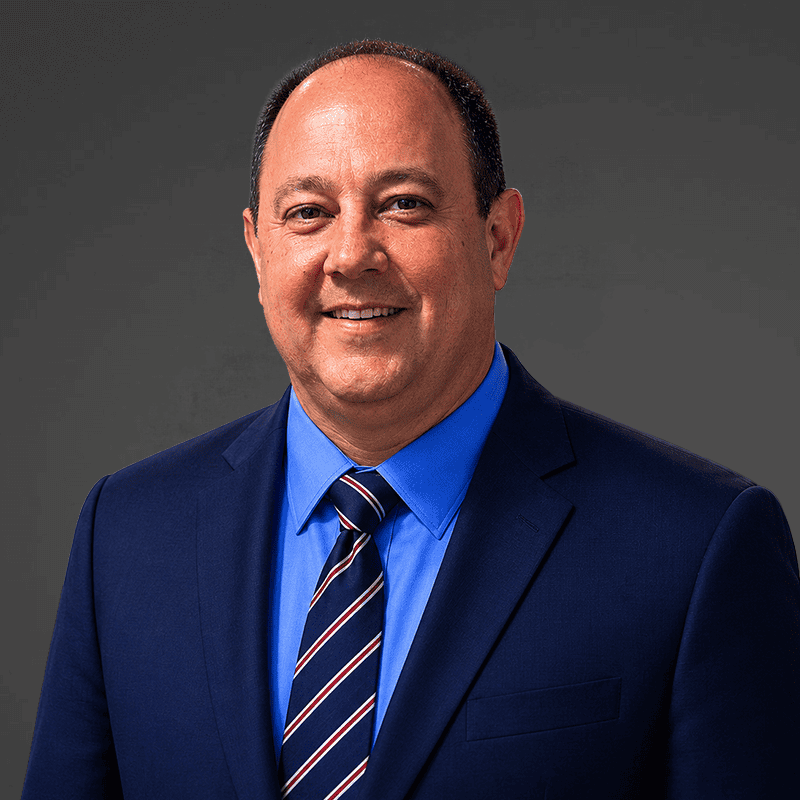
Robert Moreiro is a Financial Services Partner with Practus, LLP. He has more than 20 years of experience advising broker-dealers, registered investment advisers, financial institutions and associated persons on securities regulation, compliance, regulatory examinations, investigations and enforcement matters. He previously served as Senior Counsel in FINRA’s Enforcement Department and has served as Chief Compliance Officer and AML Compliance Officer for regulated financial-services firms. He is recognized in the 2025 and 2026 editions of The Best Lawyers in America for Securities Regulation and holds the Investment Adviser Certified Compliance Professional and Certified Securities Compliance Professional designations.