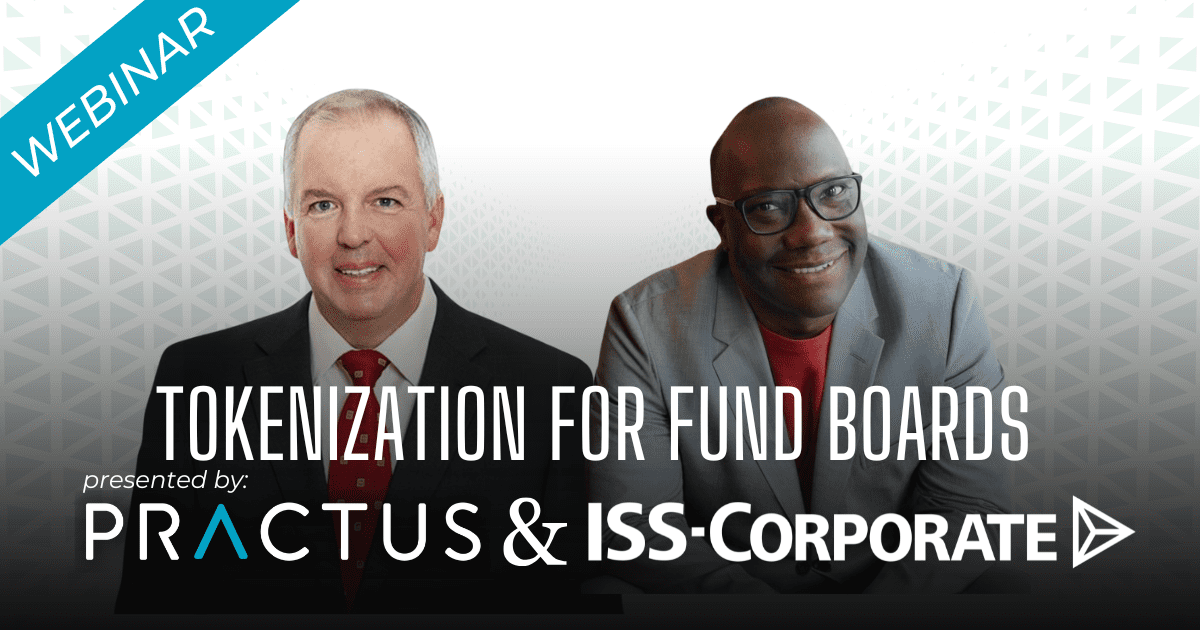
Practus Partner Timothy Spangler joins ISS Corporate’s Joe Frelix to break down where tokenization stands today—and why “wait and see” may no longer be a viable strategy.
The Conversation: From Concept to Adoption
In their discussion, Tim and Joe explored tokenization, which has moved beyond proof-of-concept into broader industry adoption. Watch the full video below.
Here are the key takeaways.
What Is Tokenization—Really?
Tokenization is the application of blockchain technology to financial instruments, such as mutual fund shares. It enables faster settlement, 24/7 transactability, and more efficient recordkeeping.
Why It Matters
Beyond efficiency, tokenization may open access to a younger, digital-native investor base that is already comfortable with wallets, private keys, and blockchain tools.
Why Money Market Funds Came First
Money market funds were a logical starting point, but tokenization is not limited to any particular strategy and depends more on distribution and investor demographics.
The Adoption Curve
The industry has moved past early adoption, and firms must now decide when—not whether—to adopt tokenization.
Regulatory Outlook
While regulatory perspectives shift, overall direction points toward continued acceptance of blockchain technologies.
What Comes Next
Tokenization may increase transaction speed, integrate financial services, and support AI-driven financial interactions.
The Bottom Line
Tokenization represents a structural shift in financial markets, and delaying engagement may carry its own risks.